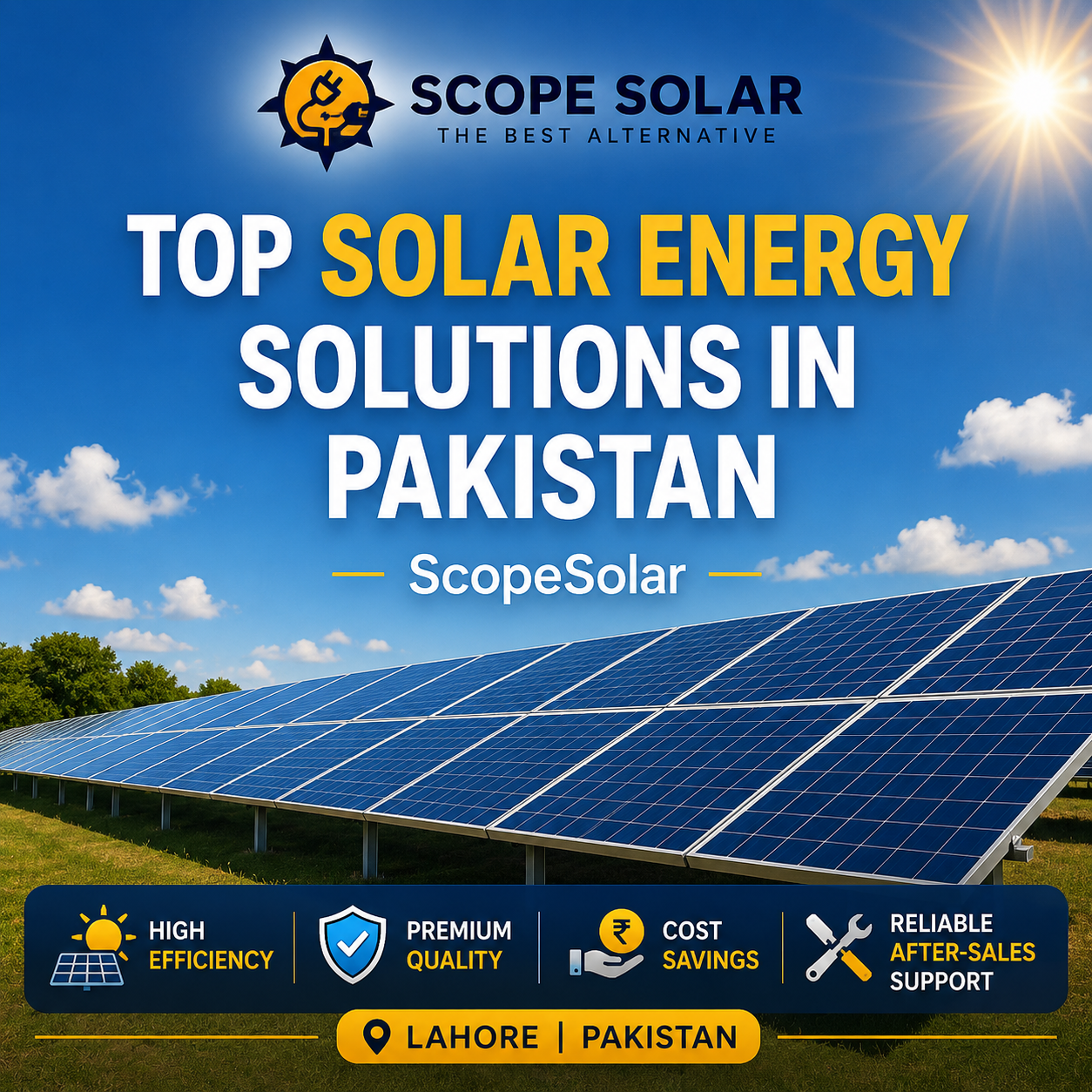
In Pakistan, where electricity shortages and rising energy costs are daily challenges, switching to solar power has become more than just an eco-friendly choice—it’s a smart financial decision. Solar energy solutions in Pakistan allow homeowners, business owners, and industrial operators to reduce bills, gain energy independence, and contribute to a cleaner environment. In this comprehensive guide, we’ll explore why solar energy matters, detail the full range of services offered by Scope Solar, and explain how you can get started on your own solar journey.
Understanding Solar Energy and Its Importance
Solar energy harnesses sunlight through photovoltaic (PV) panels to generate electricity. Unlike fossil fuels, sunlight is free, abundant, and renewable. In Pakistan’s sunny climate—averaging over 300 sunny days per year—solar power systems can operate at high efficiency nearly all year round.
Key reasons solar energy is crucial in Pakistan:
- Energy Security: Frequent load shedding and grid instability make reliable power essential.
- Cost Savings: Once installed, solar panels reduce or eliminate monthly electricity bills.
- Environmental Impact: Solar reduces greenhouse gas emissions and air pollution.
- Long-Term Investment: Solar systems can last 25 years or more with minimal upkeep.
By understanding these fundamentals, you’ll see how solar energy solutions in Pakistan offer both immediate and lasting benefits.
The Benefits of Solar Energy Solutions
- Lower Electricity Bills
With solar panels meeting much of your power needs, you buy less from the grid. Over time, savings can cover the initial installation cost and then generate pure profit. - Shield Against Tariff Increases
Electricity rates in Pakistan have risen steadily. Solar provides a predictable, stable energy cost for decades. - Reduced Carbon Footprint
Each kilowatt-hour of solar power displaces coal, oil, or gas generation—cutting CO₂ emissions and helping Pakistan meet its climate commitments. - Energy Independence
Solar systems paired with batteries or net metering give you control over when and how you use energy, even during outages. - Increased Property Value
Homes and businesses equipped with solar installations often command higher resale values. - Low Maintenance
Modern PV panels require little maintenance—occasional cleaning and periodic inspections keep them running at peak performance.
Scope Solar’s Comprehensive Service Offering
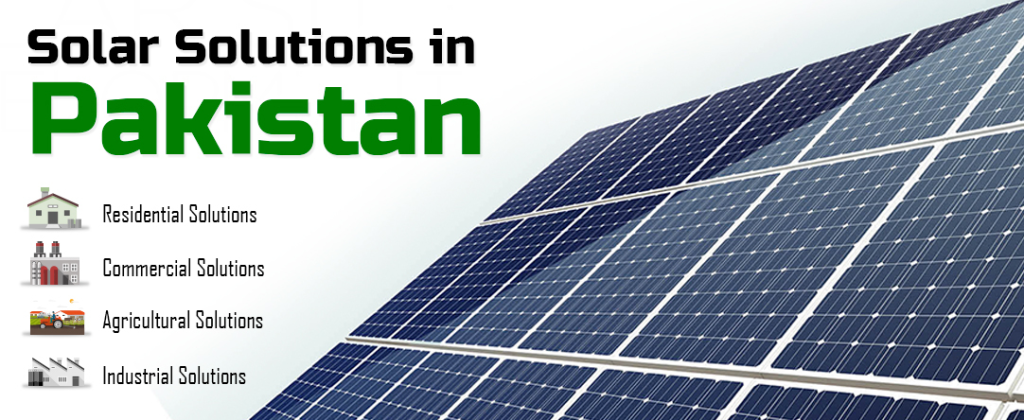
Scope Solar specializes in delivering tailor-made solar energy solutions in Pakistan across residential, commercial, and industrial sectors. Here’s a closer look:
1. Residential Solar Installations
- Customized System Design: Engineers assess your roof space, daily energy use, and budget to propose an optimal PV array.
- High-Efficiency Panels & Inverters: Scope Solar uses Tier-1 solar modules and premium inverters for long-term reliability.
- Professional Installation: Certified technicians handle mounting, wiring, and grid connection.
- Battery Backup Options: For uninterrupted power during blackouts, lithium-ion battery banks can be added.
2. Commercial Solar Projects
- Energy Audits: Detailed analysis of your monthly bills and peak usage to size the right system.
- Roof-Mounted & Ground-Mounted Arrays: Flexible solutions for office buildings, warehouses, and retail stores.
- Monitoring & Reporting: Real-time web-based dashboards show energy generation and savings.
3. Industrial-Scale Solar Farms
- Large-Scale Deployment: From 100 kW to multi-megawatt installations, Scope Solar manages large projects end-to-end.
- Grid-Tied & Off-Grid Solutions: Systems designed to feed excess power into the grid or operate independently.
- Ongoing O&M Contracts: Regular inspections, cleaning, and preventive maintenance ensure maximum uptime.
4. Net Metering Assistance
- Documentation & Application: Scope Solar guides you through NEPRA and DISCO approvals.
- Meter Installation & Commissioning: Professional installation of bi-directional meters to credit excess solar energy back to the grid.
- Billing Optimization: Strategies to maximize credits and minimize bills under net-metering regulations.
How the Process Works: From Consultation to Commissioning
- Initial Consultation
You share your energy needs, budget, and site details. - Site Survey & Feasibility Study
A Scope Solar engineer visits your location to assess roof orientation, shading, and load requirements. - System Design & Proposal
You receive a detailed proposal outlining system size, components, financial projections (ROI, payback period), and timeline. - Approval & Permits
Scope Solar handles all local permissions, building approvals, and net-metering applications. - Installation & Quality Checks
Trained installers mount panels, wire inverters, and perform safety checks. - Commissioning & Handover
After testing, your system goes live. You get training on basic operations and access to the monitoring portal. - Ongoing Support
Regular check-ups and performance reports keep your system running optimally.
Financial Considerations and Incentives
- Upfront Cost vs. Long-Term Savings: Typical payback periods in Pakistan range from 3 to 6 years, depending on system size and usage.
- Financing Options: Banks and microfinance institutions now offer solar loans with competitive interest rates.
- Government Incentives: Federal and provincial governments sometimes provide duty exemptions on solar panels and inverters.
- Net Metering Credits: Excess energy exported to the grid reduces your bill further.
By evaluating these factors, you can choose a financing plan that meets your cash-flow needs while maximizing savings.
Choosing the Right Solar Partner
When selecting a provider, consider:
- Experience & Track Record: Look for a company with years of local installations and positive customer reviews.
- Quality of Components: Tier-1 panels and branded inverters come with reliable warranties.
- Comprehensive Service: From design through maintenance, a full-service partner reduces your management burden.
- Transparent Pricing: Detailed, all-inclusive quotes help avoid surprise costs.
- After-Sales Support: A strong maintenance plan ensures your investment keeps performing.
Scope Solar ticks all these boxes, making it a trusted name in solar energy solutions in Pakistan.
Real-World Impact: A Customer Case Study
Client: A mid-sized textile factory in Faisalabad
System Size: 250 kW grid-tied solar installation
Outcomes:
- Annual Savings: PKR 4.8 million on electricity bills
- CO₂ Reduction: Approx. 300 tonnes per year
- Payback Period: Under 4 years
- Operational Uptime: 99.5% availability
The factory saw immediate savings and gained resilience against power outages, boosting productivity and reducing overhead.
Frequently Asked Questions
Q1: How long do solar panels last?
Most panels carry a 25-year performance warranty and can continue producing power for 30 years or more with minor efficiency loss.
Q2: Do I need batteries for my solar system?
Batteries are optional. For daytime bill reduction, a grid-tied system suffices. If you need blackout backup or off-grid capability, battery storage is recommended.
Q3: Will my system work on cloudy days?
Yes—modern panels generate electricity under diffuse light. Output may drop 10–25%, but you still benefit from solar generation.Top Solar Energy Solutions in Pakistan
In Pakistan, where electricity shortages and rising energy costs are daily challenges, switching to solar power has become more than just an eco-friendly choice—it’s a smart financial decision. Solar energy solutions in Pakistan allow homeowners, business owners, and industrial operators to reduce bills, gain energy independence, and contribute to a cleaner environment. In this comprehensive guide, we’ll explore why solar energy matters, detail the full range of services offered by Scope Solar, and explain how you can get started on your own solar journey.
Understanding Solar Energy and Its Importance
Solar energy harnesses sunlight through photovoltaic (PV) panels to generate electricity. Unlike fossil fuels, sunlight is free, abundant, and renewable. In Pakistan’s sunny climate—averaging over 300 sunny days per year—solar power systems can operate at high efficiency nearly all year round.
Key reasons solar energy is crucial in Pakistan:
- Energy Security: Frequent load shedding and grid instability make reliable power essential.
- Cost Savings: Once installed, solar panels reduce or eliminate monthly electricity bills.
- Environmental Impact: Solar reduces greenhouse gas emissions and air pollution.
- Long-Term Investment: Solar systems can last 25 years or more with minimal upkeep.
By understanding these fundamentals, you’ll see how solar energy solutions in Pakistan offer both immediate and lasting benefits.
The Benefits of Solar Energy Solutions
- Lower Electricity Bills
With solar panels meeting much of your power needs, you buy less from the grid. Over time, savings can cover the initial installation cost and then generate pure profit. - Shield Against Tariff Increases
Electricity rates in Pakistan have risen steadily. Solar provides a predictable, stable energy cost for decades. - Reduced Carbon Footprint
Each kilowatt-hour of solar power displaces coal, oil, or gas generation—cutting CO₂ emissions and helping Pakistan meet its climate commitments. - Energy Independence
Solar systems paired with batteries or net metering give you control over when and how you use energy, even during outages. - Increased Property Value
Homes and businesses equipped with solar installations often command higher resale values. - Low Maintenance
Modern PV panels require little maintenance—occasional cleaning and periodic inspections keep them running at peak performance.
Scope Solar’s Comprehensive Service Offerings
Scope Solar specializes in delivering tailor-made solar energy solutions in Pakistan across residential, commercial, and industrial sectors. Here’s a closer look:
1. Residential Solar Installations
- Customized System Design: Engineers assess your roof space, daily energy use, and budget to propose an optimal PV array.
- High-Efficiency Panels & Inverters: Scope Solar uses Tier-1 solar modules and premium inverters for long-term reliability.
- Professional Installation: Certified technicians handle mounting, wiring, and grid connection.
- Battery Backup Options: For uninterrupted power during blackouts, lithium-ion battery banks can be added.
2. Commercial Solar Projects
- Energy Audits: Detailed analysis of your monthly bills and peak usage to size the right system.
- Roof-Mounted & Ground-Mounted Arrays: Flexible solutions for office buildings, warehouses, and retail stores.
- Monitoring & Reporting: Real-time web-based dashboards show energy generation and savings.
3. Industrial-Scale Solar Farms
- Large-Scale Deployment: From 100 kW to multi-megawatt installations, Scope Solar manages large projects end-to-end.
- Grid-Tied & Off-Grid Solutions: Systems designed to feed excess power into the grid or operate independently.
- Ongoing O&M Contracts: Regular inspections, cleaning, and preventive maintenance ensure maximum uptime.
4. Net Metering Assistance
- Documentation & Application: Scope Solar guides you through NEPRA and DISCO approvals.
- Meter Installation & Commissioning: Professional installation of bi-directional meters to credit excess solar energy back to the grid.
- Billing Optimization: Strategies to maximize credits and minimize bills under net-metering regulations.
How the Process Works: From Consultation to Commissioning
- Initial Consultation
You share your energy needs, budget, and site details. - Site Survey & Feasibility Study
A Scope Solar engineer visits your location to assess roof orientation, shading, and load requirements. - System Design & Proposal
You receive a detailed proposal outlining system size, components, financial projections (ROI, payback period), and timeline. - Approval & Permits
Scope Solar handles all local permissions, building approvals, and net-metering applications. - Installation & Quality Checks
Trained installers mount panels, wire inverters, and perform safety checks. - Commissioning & Handover
After testing, your system goes live. You get training on basic operations and access to the monitoring portal. - Ongoing Support
Regular check-ups and performance reports keep your system running optimally.
Financial Considerations and Incentives
- Upfront Cost vs. Long-Term Savings: Typical payback periods in Pakistan range from 3 to 6 years, depending on system size and usage.
- Financing Options: Banks and microfinance institutions now offer solar loans with competitive interest rates.
- Government Incentives: Federal and provincial governments sometimes provide duty exemptions on solar panels and inverters.
- Net Metering Credits: Excess energy exported to the grid reduces your bill further.
By evaluating these factors, you can choose a financing plan that meets your cash-flow needs while maximizing savings.
Choosing the Right Solar Partner
When selecting a provider, consider:
- Experience & Track Record: Look for a company with years of local installations and positive customer reviews.
- Quality of Components: Tier-1 panels and branded inverters come with reliable warranties.
- Comprehensive Service: From design through maintenance, a full-service partner reduces your management burden.
- Transparent Pricing: Detailed, all-inclusive quotes help avoid surprise costs.
- After-Sales Support: A strong maintenance plan ensures your investment keeps performing.
Scope Solar ticks all these boxes, making it a trusted name in solar energy solutions in Pakistan.
Real-World Impact: A Customer Case Study
Client: A mid-sized textile factory in Faisalabad
System Size: 250 kW grid-tied solar installation
Outcomes:
- Annual Savings: PKR 4.8 million on electricity bills
- CO₂ Reduction: Approx. 300 tonnes per year
- Payback Period: Under 4 years
- Operational Uptime: 99.5% availability
The factory saw immediate savings and gained resilience against power outages, boosting productivity and reducing overhead.
Frequently Asked Questions
Q1: How long do solar panels last?
Most panels carry a 25-year performance warranty and can continue producing power for 30 years or more with minor efficiency loss.
Q2: Do I need batteries for my solar system?
Batteries are optional. For daytime bill reduction, a grid-tied system suffices. If you need blackout backup or off-grid capability, battery storage is recommended.
Q3: Will my system work on cloudy days?
Yes—modern panels generate electricity under diffuse light. Output may drop 10–25%, but you still benefit from solar generation.