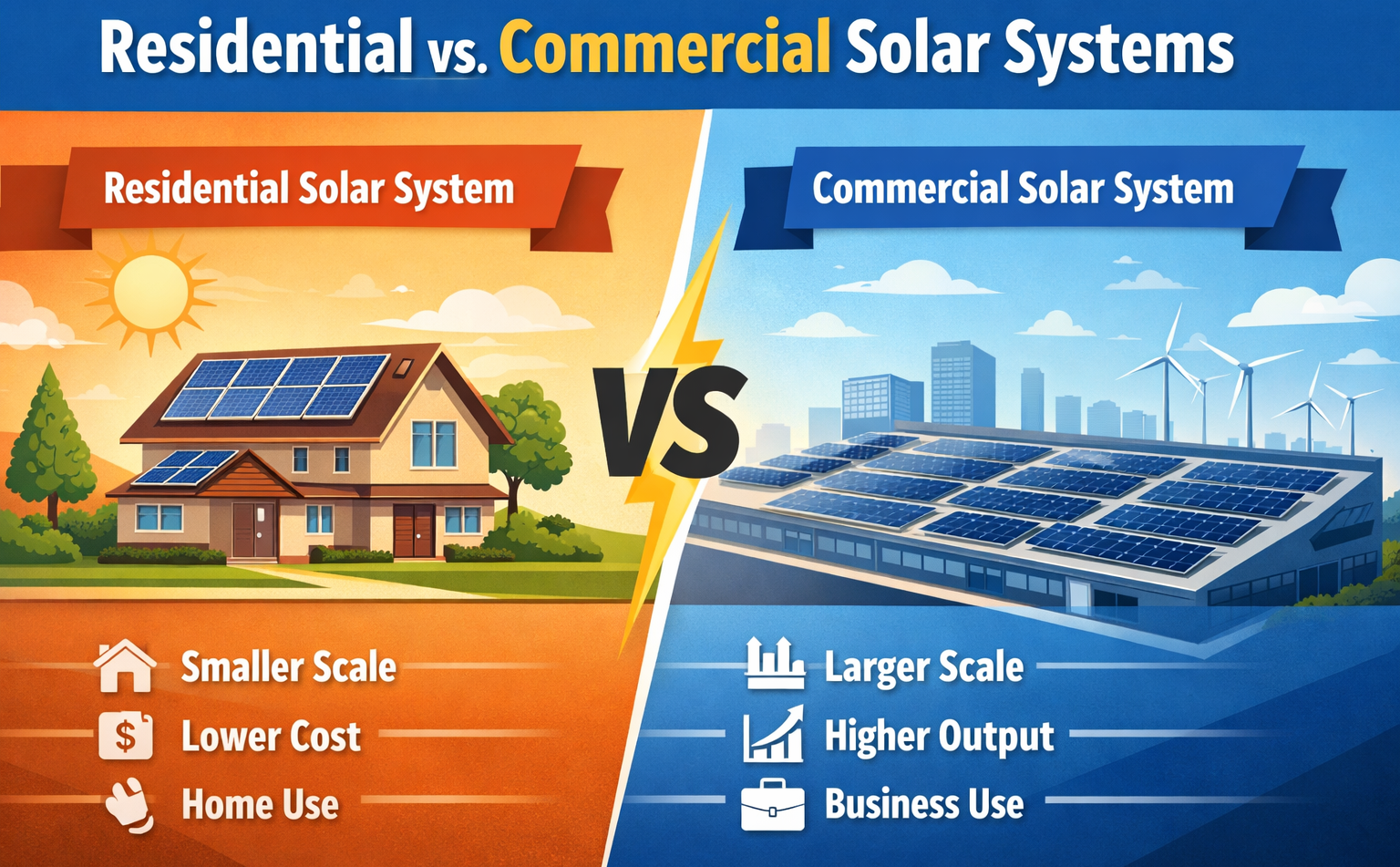
Solar energy continues to transform the way people generate electricity. Across the world, homeowners and businesses now rely on solar technology to reduce electricity bills and support clean energy initiatives. However, many people often wonder about the Residential vs Commercial Solar Systems and which option suits their needs.
Although both systems use solar panels to produce electricity, they differ in design, cost, installation scale, and energy output. Therefore, understanding these differences helps property owners make smarter investment decisions. In this article, we will explore how residential and commercial solar setups work, compare their features, and explain how companies like Scope Solar help customers install the right system for their property.
Understanding Residential Solar Systems
Residential solar systems serve homes and small properties. These systems usually sit on rooftops and generate enough electricity to power daily household activities. Many homeowners install solar panels to reduce dependency on grid electricity and protect themselves from rising energy costs.
Typically, residential installations include fewer panels than business systems because homes consume less electricity. However, modern solar technology allows homeowners to generate significant power even with limited roof space.
Homeowners also prefer solar systems because they provide long-term savings. Although the Residential solar systems cost may seem high initially, the system pays for itself over time through reduced electricity bills. Furthermore, net metering policies in many regions allow homeowners to sell excess electricity back to the grid.
What Are Commercial Solar Systems?
Commercial solar systems operate on a much larger scale. Businesses, factories, warehouses, and office buildings install these systems to power heavy machinery and large facilities. Because commercial properties require more electricity, these systems include a larger number of solar panels.
Most commercial installations use large rooftops, parking structures, or open land to mount solar arrays. As a result, companies generate massive amounts of renewable electricity and significantly lower operational costs.
Businesses often search for Commercial solar panels for sale because these panels support high energy demand. Moreover, modern Commercial solar panels deliver greater efficiency and durability, which makes them ideal for industrial environments.
Companies like Scope Solar help organizations design and install commercial solar solutions that maximize power generation and minimize electricity expenses.
Residential vs Commercial Solar Systems: Key Differences
Although both systems rely on photovoltaic technology, several factors separate residential solar installations from commercial ones. Understanding the Residential vs Commercial Solar Systems: Key Differences helps property owners choose the right energy solution.
System Size and Power Output
Residential solar systems usually range between 3 kW and 10 kW. This capacity covers household appliances such as air conditioners, lights, refrigerators, and electronics.
On the other hand, commercial installations often range from 20 kW to several megawatts. Businesses operate multiple machines, lighting systems, and HVAC units, so they require much higher electricity output.
Therefore, the scale of energy production represents one of the biggest Residential vs Commercial Solar Systems: Key Differences.
Installation Location
Homeowners mostly install solar panels on rooftops. Residential roofs provide sufficient space for smaller solar arrays.
However, commercial properties offer multiple installation options. Businesses install solar panels on rooftops, parking lots, ground mounts, and industrial structures. Consequently, these systems expand easily when companies need more power.
Equipment and Technology
Residential systems usually use standard solar panels and small inverters. These components efficiently handle household electricity needs.
Commercial solar installations rely on more advanced equipment. Businesses often install high-capacity inverters, monitoring systems, and stronger mounting structures. Many companies also search for Commercial solar panels for sale that deliver higher efficiency and durability.
Because of these technological differences, the equipment used represents another major factor in Residential vs Commercial Solar Systems: Key Differences.
Installation Complexity
Residential solar installations usually take a few days to complete. Installers mount the panels, connect the inverter, and integrate the system with the home’s electrical network.
Commercial projects require detailed planning and engineering. Installers must analyze power demand, roof structure, safety regulations, and electrical load distribution. Therefore, commercial installations often take weeks or months to complete.
This complexity highlights another important aspect of Residential vs Commercial Solar Systems: Key Differences.
Cost Comparison Between Residential and Commercial Systems
Cost plays a critical role when property owners consider solar energy solutions. Many homeowners research the Residential solar systems cost before making a decision.
Residential systems usually cost less because they include fewer panels and smaller equipment. However, installation costs vary depending on roof size, system capacity, and inverter technology.
Commercial solar projects require higher investment because they involve larger systems and advanced engineering. Nevertheless, businesses recover their investment faster because they reduce massive electricity expenses.
Additionally, companies often receive tax benefits, government incentives, and energy credits. These financial advantages make commercial solar installations extremely attractive for large organizations.
Efficiency and Energy Production
Both residential and commercial solar systems convert sunlight into electricity using photovoltaic cells. However, commercial solar setups usually produce more electricity because they contain a larger number of panels.
Businesses frequently install Commercial solar panels that feature higher efficiency ratings. These panels capture more sunlight and generate stronger power output.
Meanwhile, residential systems focus on maximizing available rooftop space. Installers design the system carefully to ensure the panels receive maximum sunlight throughout the day.
Because of these differences, energy production remains one of the most noticeable Residential vs Commercial Solar Systems: Key Differences.
Maintenance and Monitoring
Solar systems require regular monitoring to ensure optimal performance. However, maintenance requirements vary depending on system size.
Residential systems require simple maintenance. Homeowners usually clean the panels periodically and monitor system performance through mobile apps.
Commercial solar systems require professional maintenance services. Businesses monitor energy production, inspect electrical connections, and ensure optimal system efficiency. Companies like Scope Solar offer maintenance plans that keep large solar installations running efficiently.
Proper maintenance improves system lifespan and ensures consistent energy generation.
Environmental Impact of Solar Systems
Both residential and commercial solar installations significantly reduce carbon emissions. Solar energy produces clean electricity without burning fossil fuels.
Residential systems allow homeowners to contribute to environmental protection while saving money on electricity bills. At the same time, commercial solar installations help businesses reduce their carbon footprint and demonstrate environmental responsibility.
Large commercial projects generate massive amounts of renewable energy. Therefore, they play a major role in reducing national energy demand and supporting sustainable development.
As a result, both systems contribute to cleaner air, lower emissions, and a healthier planet.
Choosing the Right Solar System
Selecting the right solar system depends on property type, electricity consumption, and available installation space. Homeowners should analyze their energy usage and budget before installing a solar system.
Businesses must evaluate their operational energy demand and available roof or land space. They should also explore Commercial solar panels for sale that match their facility requirements.
Professional solar companies such as Scope Solar help both homeowners and businesses design customized solar solutions. Their experts analyze electricity usage, recommend the ideal system size, and ensure safe installation.
With the right guidance, property owners can maximize solar benefits and achieve long-term energy savings.
Final Thoughts
Understanding the Residential vs Commercial Solar Systems: Key Differences helps individuals and businesses make informed energy decisions. Residential systems focus on powering homes efficiently, while commercial systems generate large-scale electricity for businesses and industrial facilities.
Although the Residential solar systems cost appears lower initially, both systems provide long-term financial and environmental benefits. Moreover, businesses investing in Commercial solar panels or searching for Commercial solar panels for sale can significantly reduce operational expenses.
Solar energy continues to grow rapidly, and companies like Scope Solar make the transition to renewable energy easier for both homeowners and businesses. By choosing the right solar solution, property owners can reduce electricity bills, protect the environment, and secure a sustainable energy future.
FAQs
What is the main difference between residential and commercial solar systems?
Residential systems power homes and use fewer panels, while commercial systems serve businesses and generate larger amounts of electricity.
What is the average residential solar system cost?
The cost varies depending on system size, panel efficiency, and installation complexity. However, homeowners recover their investment through long-term electricity savings.
Where can businesses find Commercial solar panels for sale?
Businesses can purchase solar panels from professional solar providers such as Scope Solar that specialize in commercial solar installations.
Are Commercial solar panels more efficient than residential panels?
Yes, many Commercial solar panels offer higher efficiency and durability because businesses require larger power output.
Do both systems qualify for solar incentives?
Yes, both residential and commercial solar installations often qualify for government incentives, tax benefits, and net metering programs depending on the region.