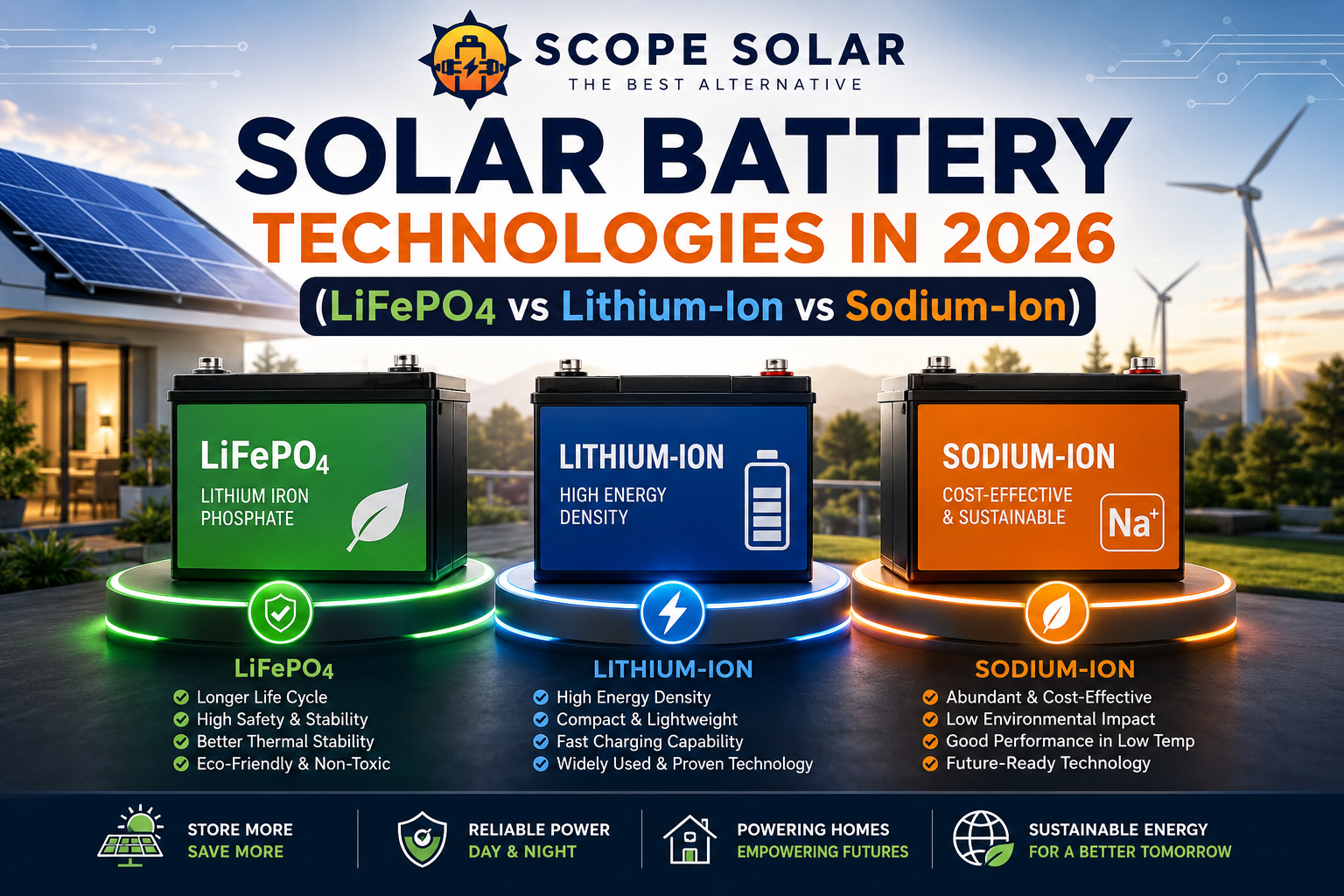
The rapid growth of renewable energy has made battery storage one of the most important components of modern solar systems. In 2026, solar batteries are smarter, safer and more efficient than ever before. Whether you’re installing a Residential Solar System, upgrading a Commercial Solar System, or investing in Industrial Solar Solutions, choosing the right battery technology is essential for maximizing energy efficiency and long-term value.
Today, three battery technologies dominate discussions in the renewable energy industry:
- LiFePO4 (Lithium Iron Phosphate)
- Lithium-Ion Batteries
- Sodium-Ion Batteries
Each technology offers unique advantages, performance characteristics and applications. While LiFePO4 batteries remain the preferred choice for many modern solar installations, Sodium-Ion batteries are emerging as a promising alternative due to their affordability and sustainable raw materials.
In this guide, we’ll compare these three technologies, explain their strengths and limitations and help you understand which battery is best suited for your solar energy needs in 2026.
Why Battery Technology Matters in Solar Energy
A solar battery does much more than simply store electricity.
It plays a critical role in:
- Storing excess solar energy
- Improving energy availability
- Enhancing system reliability
- Supporting smart energy management
- Increasing the efficiency of Solar Energy Solutions
As solar technology continues to evolve, battery innovation has become equally important. Modern batteries are now designed to deliver higher efficiency, faster charging, longer lifespan and improved safety compared to earlier generations.
Choosing the right battery can significantly influence the overall performance of your solar investment.
What Is a LiFePO4 Battery?
LiFePO4 (Lithium Iron Phosphate) is one of the most advanced and widely used battery technologies in the solar industry today.
Unlike conventional lithium batteries, LiFePO4 batteries use lithium iron phosphate as the cathode material, making them more stable and safer.
Because of their excellent performance and long lifespan, they have become the preferred battery choice for many premium Solar Energy Solutions.
Advantages of LiFePO4 Batteries
Outstanding Safety
Safety is one of the biggest reasons why LiFePO4 batteries have become so popular.
They offer:
- Excellent thermal stability
- Low fire risk
- High resistance to overheating
- Better chemical stability
These features make them ideal for residential and commercial solar applications.
Long Service Life
One of the strongest advantages of LiFePO4 batteries is their impressive lifespan.
Most premium batteries can achieve:
- 4,000–8,000 charge cycles
- 10–15 years or more under normal operating conditions
This long lifespan reduces replacement costs and improves the overall return on investment.
High Charging Efficiency
LiFePO4 batteries typically achieve charging efficiencies above 95%.
This means more of the electricity generated by your solar panels is stored for future use instead of being lost during charging.
Low Maintenance
Modern LiFePO4 batteries require very little maintenance.
Their advanced Battery Management Systems (BMS) continuously monitor:
- Voltage
- Temperature
- Charging status
- Cell balancing
- Overall battery health
This intelligent management improves safety and extends battery life.
What Is a Traditional Lithium-Ion Battery?
The term Lithium-Ion Battery covers several battery chemistries, including NMC (Nickel Manganese Cobalt), NCA (Nickel Cobalt Aluminum) and others.
These batteries have powered:
- Smartphones
- Laptops
- Electric vehicles
- Consumer electronics
- Energy storage systems
They remain one of the most widely used rechargeable battery technologies worldwide.
Advantages of Lithium-Ion Batteries
High Energy Density
Lithium-Ion batteries can store a large amount of energy in a compact space.
This makes them suitable where installation space is limited.
Lightweight Design
Compared to older battery technologies such as lead-acid batteries, lithium-ion batteries are significantly lighter.
Their compact size simplifies installation and transportation.
Fast Charging
Modern lithium-ion batteries support rapid charging while maintaining high efficiency.
This allows users to quickly recharge battery storage during periods of strong solar production.
Limitations of Lithium-Ion Batteries
Although lithium-ion batteries offer excellent performance, they also have some limitations.
These may include:
- Shorter lifespan than LiFePO4
- Greater sensitivity to high temperatures
- More complex cooling requirements
- Higher risk of thermal runaway under extreme conditions
Because of these factors, many modern Solar Company in Pakistan installations now favor LiFePO4 technology for stationary solar energy storage.
What Are Sodium-Ion Batteries?
One of the newest developments in battery technology is the Sodium-Ion Battery.
Instead of lithium, these batteries use sodium, an element that is far more abundant and widely available.
Major battery manufacturers are investing heavily in Sodium-Ion technology because it offers several promising advantages.
Although still expanding commercially, Sodium-Ion batteries are expected to play a growing role in renewable energy storage over the coming years.
Advantages of Sodium-Ion Batteries
Abundant Raw Materials
Sodium is one of the most abundant elements on Earth.
This helps reduce dependence on lithium mining and improves long-term supply stability.
Lower Production Costs
Since sodium is easier to obtain, manufacturers expect future production costs to decrease significantly.
This could make solar battery storage more affordable for homeowners and businesses.
Better Cold Weather Performance
Research indicates that Sodium-Ion batteries maintain strong performance even in colder environments.
This makes them suitable for regions with low winter temperatures.
Improved Sustainability
Because sodium is widely available and easier to source, Sodium-Ion batteries have the potential to reduce the environmental impact associated with battery production.
This supports the global shift toward cleaner and more sustainable energy technologies.
LiFePO4 vs Lithium-Ion vs Sodium-Ion
The three battery technologies each have different strengths.
| Feature | LiFePO4 | Lithium-Ion | Sodium-Ion |
| Safety | Excellent | Good | Very Good |
| Lifespan | Excellent | Good | Good |
| Charging Efficiency | Excellent | Excellent | Good |
| Maintenance | Very Low | Low | Low |
| Energy Density | High | Very High | Moderate |
| Sustainability | High | Moderate | Excellent |
| Commercial Availability | Widely Available | Widely Available | Growing Rapidly |
| Best Use | Residential Solar System, Commercial Solar System | Portable Devices & EVs | Future Grid & Solar Storage |
Each battery technology serves different needs, but LiFePO4 batteries continue to lead the market for stationary solar energy storage because of their balance of safety, durability and long-term performance.
Which Battery Technology Is Best for Solar Systems?
For most homeowners and businesses investing in Solar Energy Solutions, LiFePO4 batteries remain the preferred option in 2026.
They provide:
- Long lifespan
- Excellent safety
- High charging efficiency
- Minimal maintenance
- Strong compatibility with modern solar inverters
However, Sodium-Ion batteries are attracting significant attention and may become more common as production scales and costs continue to decline.
Latest Innovations in Solar Battery Technology (2026)
Battery technology is advancing faster than ever. In 2026, manufacturers are introducing smarter, safer and more efficient energy storage systems that enhance the performance of modern Solar Energy Solutions.
Some of the latest innovations include:
AI-Powered Battery Management Systems (BMS)
Artificial Intelligence has become a game-changer in battery technology. Modern Battery Management Systems (BMS) use AI algorithms to continuously monitor battery performance and optimize charging cycles.
AI-powered BMS can:
- Predict battery health
- Prevent overcharging and deep discharge
- Balance battery cells automatically
- Detect faults before they become serious
- Extend battery lifespan
- Improve charging efficiency
This intelligent management helps maximize battery performance while reducing maintenance needs.
Smart Mobile Monitoring
Most premium battery manufacturers now offer cloud-based monitoring platforms.
Through a mobile application, users can check:
- Battery charge level
- Power consumption
- Charging status
- Battery temperature
- Historical energy usage
- System alerts
These smart monitoring tools give homeowners and businesses complete visibility into their energy storage systems.
Improved Battery Safety
Safety continues to be one of the highest priorities in battery development.
Modern batteries now include advanced protection features such as:
- Over-voltage protection
- Over-current protection
- Temperature monitoring
- Short-circuit protection
- Automatic shutdown during abnormal conditions
These features improve operational safety and enhance system reliability.
Choosing the Right Battery for Your Solar System
Selecting the best battery depends on several important factors.
Energy Requirements
Start by evaluating how much electricity your home or business consumes each day.
Larger energy demands typically require batteries with higher storage capacity.
Battery Lifespan
Longer-lasting batteries generally provide better long-term value.
LiFePO4 batteries are among the strongest performers in this category, often lasting more than a decade with proper use.
Safety Features
Battery safety should never be overlooked.
Look for products that include:
- Intelligent Battery Management Systems
- Thermal protection
- Cell balancing
- Automatic fault detection
- Certified safety standards
Warranty and Manufacturer Support
A quality battery should include a strong manufacturer’s warranty.
Many premium brands now offer warranties ranging from 8 to 15 years, depending on the product and usage conditions.
Reliable after-sales support is equally important for long-term peace of mind.
Future Expansion
If you expect your electricity needs to grow in the coming years, choose a battery system that supports modular expansion.
This allows you to increase storage capacity without replacing the entire system.
Which Battery Is Best for Different Applications?
Residential Solar System
For homeowners, LiFePO4 batteries are generally the preferred choice because they combine safety, long lifespan and reliable performance.
Commercial Solar System
Commercial users often prioritize durability, efficient charging and advanced monitoring. LiFePO4 technology is well suited to these requirements.
Industrial Solar Solutions
Industrial facilities require battery systems capable of handling frequent charge and discharge cycles while maintaining stable performance.
High-quality LiFePO4 battery systems continue to be one of the most dependable options for these demanding environments.
Future of Solar Battery Technologies (2027–2030)
Battery technology is expected to evolve rapidly over the next few years.
Some anticipated trends include:
- Wider adoption of Sodium-Ion batteries
- Commercial availability of Solid-State batteries
- Faster charging technologies
- Higher energy density
- AI-driven energy optimization
- Improved recycling methods
- Lower manufacturing costs
- Enhanced sustainability
These innovations will make solar energy storage more efficient, affordable and environmentally friendly.
Why Professional Battery Selection Matters
A high-quality battery alone does not guarantee optimal performance.
Proper battery sizing, installation and integration with the rest of the solar system are equally important.
When choosing a Solar Company in Pakistan, look for professionals who evaluate:
- Daily electricity usage
- Future energy requirements
- Roof space
- Battery compatibility
- Environmental conditions
- Expansion plans
This helps ensure that the selected battery technology aligns with your energy goals and provides reliable long-term performance.
Companies like Scope Solar focus on designing customized Solar Energy Solutions that combine premium components with professional installation practices, helping homeowners and businesses maximize the value of their solar investment.
Conclusion
As battery technology continues to evolve, selecting the right energy storage solution has become an essential part of every modern solar installation.
In 2026, LiFePO4 batteries remain the leading choice for most Residential Solar Systems, Commercial Solar Systems and Industrial Solar Solutions due to their exceptional safety, long lifespan, low maintenance and reliable performance.
Meanwhile, Lithium-Ion batteries continue to serve a wide range of applications, particularly where compact size and high energy density are priorities. At the same time, Sodium-Ion batteries are emerging as a promising technology that could reshape the future of renewable energy storage through lower costs and greater sustainability.
Choosing the right battery depends on your energy requirements, budget and long-term goals. By working with an experienced Solar Company in Pakistan, such as Scope Solar, you can select a battery solution that delivers dependable performance and supports a smarter, more efficient energy future.
Frequently Asked Questions (FAQs)
Which battery technology is best for solar systems in 2026?
For most residential and commercial applications, LiFePO4 batteries are considered the best choice because they offer excellent safety, long lifespan and high efficiency.
What is the difference between LiFePO4 and Lithium-Ion batteries?
LiFePO4 batteries use lithium iron phosphate chemistry, making them safer and more durable, while traditional Lithium-Ion batteries often provide higher energy density but may have a shorter lifespan depending on their chemistry.
Are Sodium-Ion batteries available for solar systems?
Yes, Sodium-Ion batteries are entering the market and are expected to become more widely available as manufacturers increase production and improve performance.
How long do LiFePO4 batteries last?
Most premium LiFePO4 batteries can last between 10 and 15 years and often deliver 4,000 to 8,000 charge cycles, depending on usage and operating conditions.
Can AI improve solar battery performance?
Yes. AI-powered Battery Management Systems monitor battery health, optimize charging cycles, improve efficiency and help extend battery lifespan.
Which battery requires the least maintenance?
LiFePO4 batteries typically require very little maintenance because of their stable chemistry and advanced Battery Management Systems.