What is an On-Grid Solar System?
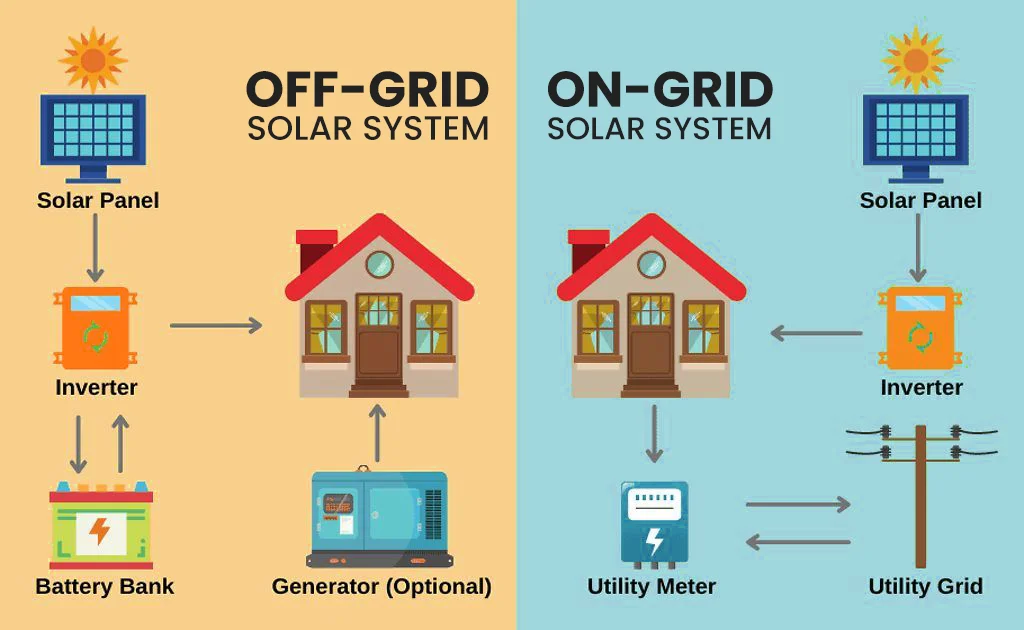
On-grid solar system is a solar power system that operates with the Utility power system or Electrical Utility grid. Unlike off-grid systems, which require batteries to store energy, on-grid systems rely on the electricity grid to balance the energy supply and demand. This means the system can draw power from the grid when solar production is insufficient and feed excess power back into the grid when production exceeds consumption.
On-grid solar systems are particularly popular in countries like Pakistan, where energy demand is high, and solar resources are abundant. This setup offers a cost-effective solution for reducing electricity bills and addressing energy shortages.
How Does an On-Grid Solar System Work?
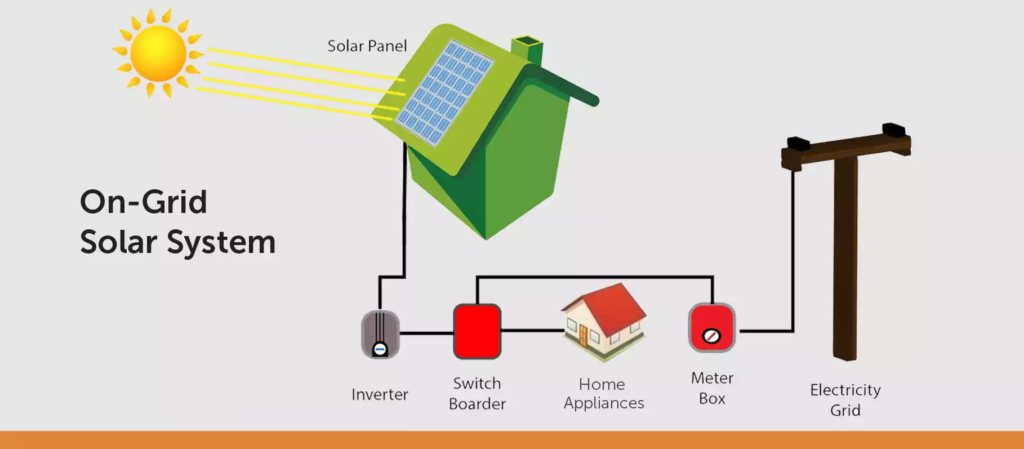
The main component of an on-grid solar system includes:
- Solar Panels: Utilize light from sun and transform it to DC electricity.
- Inverter: Converts DC electricity into alternating current (AC), which can be used by household appliances.
- Utility Grid: Acts as a backup energy source and storage system. Excess energy generated during the day is exported to the grid, and the consumer can draw power from the grid at night or during low solar output periods.
- Net Metering: A key feature that allows consumers to offset their electricity bills by exporting surplus energy to the grid.
In Pakistan, on-grid solar solutions are gaining popularity because they provide an efficient way to manage energy usage without the high upfront costs associated with battery systems.
Advantages of an On-Grid Solar System
The benefits of an on-grid solar system make it a preferred choice for many households and businesses:
- Cost-Effective: On-grid systems are generally cheaper to install compared to off-grid systems because they do not require batteries. For instance, a 5kW on-grid solar system price in Pakistan is significantly lower than a comparable off-grid system.
- Lower Electricity Bills: With net metering, excess energy is exported to the grid, reducing electricity bills. Such savings, over time, become quite considerable.
- High Efficiency: On-grid systems operate with high efficiency as they directly supply power to the grid. They avoid the energy losses associated with battery charging and discharging.
- Scalability: On-grid systems can be easily scaled up. For instance, upgrading from a 10kW solar system in Pakistan to a larger 15kW solar system price in Pakistan is straightforward.
- Environmental Benefits: By using solar energy, households and businesses reduce their dependence on fossil fuels, contributing to a cleaner and greener environment.
Disadvantages of an On-Grid Solar System
Despite its numerous benefits, an on-grid solar system has some limitations:
- Dependence on the Grid: Since the system is tied to the grid, it becomes non-functional during power outages unless a backup solution is in place.
- No Battery Backup: On-grid systems typically do not include batteries, making them unsuitable for areas with frequent power outages. A grid-tied solar system without battery backup cannot store energy for later use.
- Upfront Costs: While cheaper than off-grid systems, on-grid solar systems still involve significant upfront investment. For instance, the 30kW solar system price in Pakistan may be a substantial expense for businesses.
- Net Metering Approval: Net metering policies and approvals can be a hurdle in some areas of Pakistan, slowing down the implementation process.
Popular On-Grid Solar System Sizes in Pakistan
Different households and businesses require different solar system sizes based on their energy needs. Below is an overview of popular options:
- 5kW On-Grid Solar System
• Price: The 5kW on-grid solar system price in Pakistan is suitable for small households.
• Use Case: Powers essential appliances such as fans, lights, and small kitchen equipment. - 10kW Solar System in Pakistan
• Price: Mid-sized households and small offices often opt for this setup.
• Use Case: Supports larger appliances and covers moderate energy needs. - 15kW Solar System Price in Pakistan
• Price: Ideal for larger homes or small businesses. The 15kVA solar system price in Pakistan is slightly higher but offers excellent coverage for energy demands.
• Use Case: Reduces reliance on the grid significantly. - 30kW Solar System Price in Pakistan
• Price: Designed for commercial establishments.
• Use Case: Caters to high energy consumption with optimal performance.
Parameters Causing Changes in the On-Grid Solar System Costs in Pakistan
The price of an on-grid solar system in Pakistan varies depending on several factors:
- System Size: Larger systems like the 30kW solar system price in Pakistan are costlier but offer more energy savings over time.
- Quality of Components: Higher-quality panels and inverters increase upfront costs but enhance durability and efficiency.
- Installation Costs: Professional installation ensures optimal performance but adds to the overall expense.
- Net Metering Availability: Areas with established net metering policies make on-grid systems more feasible.
Why Choose an On-Grid Solar System in Pakistan?
The on-grid solar system in Pakistan is becoming a popular choice due to the country’s energy challenges. With frequent load shedding and rising electricity costs, adopting solar energy provides a reliable and sustainable solution. Moreover, with falling solar equipment prices, systems like the 15kW solar system price in Pakistan are becoming more affordable for consumers.
Additionally, government incentives and policies promoting renewable energy, such as net metering, make on-grid systems a practical and eco-friendly choice.
FAQs
Q1: What is an on-grid solar solution?
An on-grid solar solution, also known as a grid-tied solar system, is a solar power setup connected directly to the electricity grid. It allows users to export surplus energy to the grid and draw power when solar energy is insufficient.
Q2: What is solar inverter on grid?
A solar inverter on-grid, also known as a grid-tied inverter, is a device that converts the direct current (DC) electricity generated by solar panels into alternating current (AC) electricity used by appliances. It connects directly to the utility grid, enabling the system to export surplus energy to the grid and draw power when solar generation is insufficient. These inverters are essential for on-grid solar systems and support net metering functionality.
Q3: What is the best solar system in Pakistan?
The best solar system in Pakistan depends on your energy needs and location. On-grid solar systems are ideal for urban areas with reliable grid connections, offering cost savings through net metering. Off-grid systems are better for remote areas with frequent power outages, as they provide energy independence. For a balance, hybrid systems combine both options, offering battery backup and grid connectivity for optimal performance.
Q4: Which type of solar panel is best?
The best type of solar panel depends on your needs. Monocrystalline panels are highly efficient and ideal for limited spaces, offering better performance in low light. Polycrystalline panels are cost-effective and work well in sunny areas with ample space. For specialized applications, thin-film panels are lightweight and flexible but less efficient. Evaluate your budget, space, and energy requirements to choose the right option.
Q5: Which inverter is best in Pakistan?
The best inverter in Pakistan depends on your energy needs, budget, and solar system type. Popular brands like Fronius, Huawei, Sungrow, and GoodWe are highly rated for their reliability and efficiency. For smaller systems, Inverex and Homage inverters are widely used. It’s important to choose an inverter compatible with your solar setup, whether it’s on-grid, off-grid, or hybrid.
Conclusion
An on-grid solar system is a cost-effective and environmentally friendly way to generate electricity while reducing dependency on the utility grid. Although it has some limitations, such as lack of battery backup and grid dependency, the advantages far outweigh these drawbacks for areas with stable grid connections.
With options like the 5kW solar system price in Pakistan, larger setups such as the 15kW solar system price in Pakistan, and even commercial-grade 30kW solar systems, households and businesses can find a suitable solution tailored to their energy needs. By investing in solar system, consumers not only save money but also contribute to a greener future.