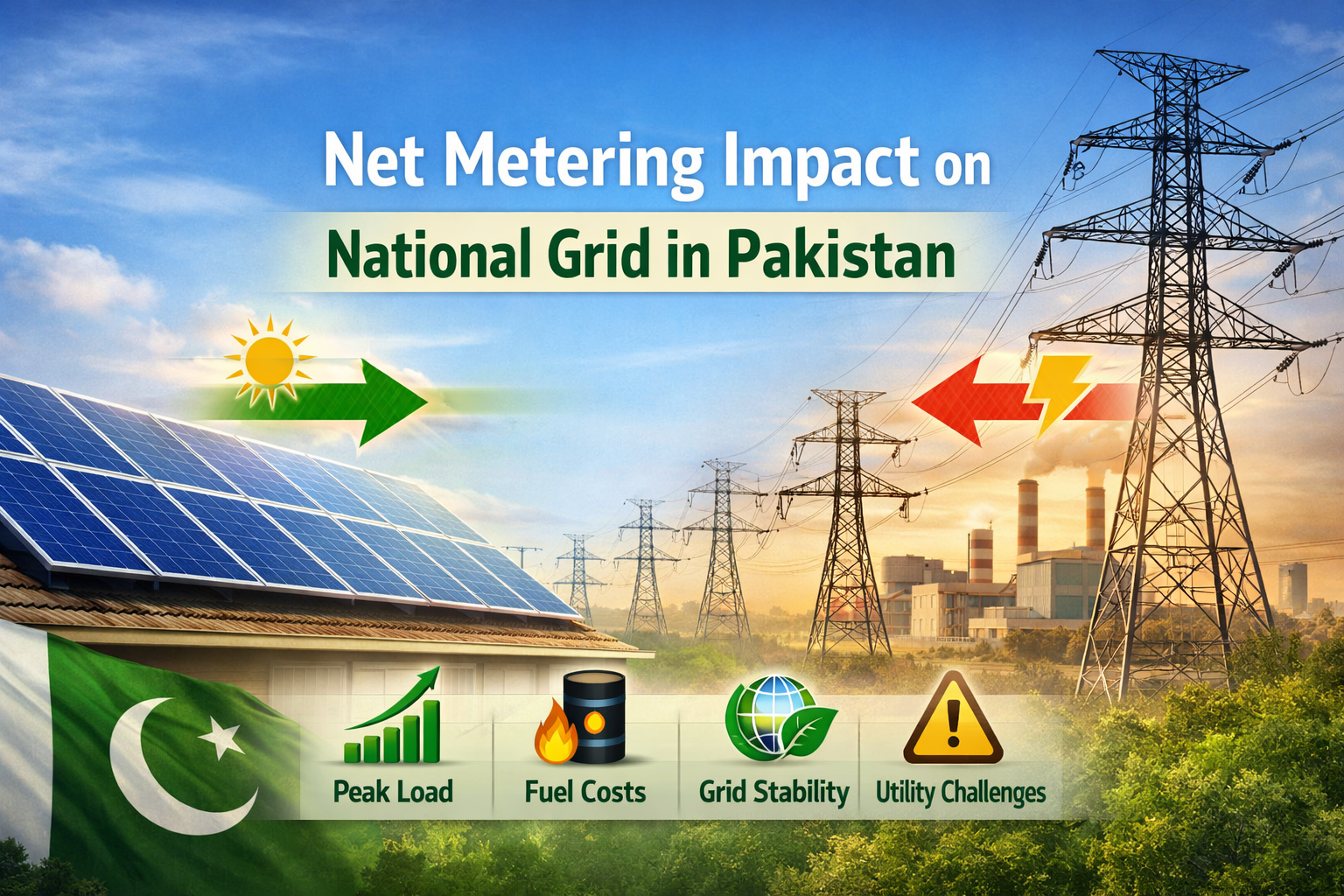
As solar energy adoption continues to grow across Pakistan, net metering has become a key part of the country’s energy conversation. From residential rooftops in Lahore to commercial setups nationwide, more consumers are generating their own electricity and exporting surplus power to the national grid.
While net metering offers clear benefits, it also raises important questions about grid stability, electricity pricing, and long-term energy planning. Understanding its real impact helps users, policymakers, and energy providers make informed decisions.
What Is Net Metering?
Net metering is a billing mechanism that allows electricity consumers to install solar systems and connect them to the national grid. When a solar system generates more electricity than the user consumes, the excess units are exported to the grid. These exported units are then adjusted against imported units when solar generation is low, such as at night.
In Pakistan, net metering is regulated by NEPRA and implemented through distribution companies (DISCOs) like LESCO in Lahore.
Net metering is commonly used by:
- Residential homeowners
- Commercial buildings
- Industrial units
- Educational and healthcare facilities
How the National Grid in Pakistan Works
Pakistan’s national grid is traditionally designed for centralized power generation, where electricity flows one way:
Power plants → Transmission lines → Distribution companies → Consumers
The system mainly depends on:
- Thermal (oil, gas, coal)
- Hydropower
- Limited renewable energy sources
Peak demand usually occurs during daytime and summer months, when air conditioning and industrial activity are at their highest.
With net metering, this traditional one-way flow changes into a two-way system, where consumers also act as power producers.
Positive Impact of Net Metering on the National Grid
Reduced Pressure During Peak Hours
Solar systems generate maximum electricity during the daytime, which aligns with peak demand hours. This reduces the burden on conventional power plants and helps stabilize supply during high-load periods.
Lower Dependence on Imported Fuels
By injecting clean solar energy into the grid, net metering helps reduce reliance on imported oil and gas, supporting Pakistan’s energy security and reducing foreign exchange pressure.
Reduced Transmission Losses
Electricity generated close to the point of consumption minimizes transmission and distribution losses, which are a significant challenge in Pakistan’s power sector.
Support for Renewable Energy Goals
Net metering directly contributes to Pakistan’s renewable energy targets and helps lower carbon emissions without requiring large-scale government investments.
Challenges Net Metering Creates for the National Grid
Grid Stability and Voltage Issues
High solar penetration in certain areas can lead to voltage fluctuations and reverse power flow, especially in older distribution networks not designed for distributed generation.
Financial Impact on Distribution Companies
When net metering users offset their electricity bills, DISCOs experience reduced revenue while still bearing fixed costs such as:
- Grid maintenance
- Infrastructure upgrades
- Staff and operational expenses
Load Forecasting Difficulties
Solar output varies based on weather conditions. This makes demand forecasting more complex and requires advanced grid management systems.
Infrastructure Limitations
Much of Pakistan’s grid infrastructure lacks:
- Smart meters
- Advanced inverters
- Real-time monitoring systems
Without upgrades, high net metering penetration can strain local feeders.
Why Utilities and Regulators Are Concerned
Power distribution companies and regulators are focused on maintaining grid reliability and financial sustainability. Concerns include:
- Cost shifting to non-solar users
- Uncontrolled growth of net metering systems
- Aging infrastructure not ready for high renewable integration
These concerns have led to discussions around revising policies, introducing net billing models, or implementing time-based tariffs.
How Net Metering Challenges Can Be Managed
The solution is not to stop net metering, but to manage it properly.
Effective measures include:
- Smart grid upgrades
- Time-of-use tariffs to encourage balanced consumption
- Energy storage systems (batteries)
- Technical standards for inverters
- Controlled net metering capacity limits
These steps ensure grid stability while allowing solar adoption to continue.
What This Means for Solar Users in Pakistan
For homeowners and businesses in Lahore and across Pakistan:
- Solar remains a cost-effective and reliable solution
- Net metering policies may evolve, not disappear
- Early adopters benefit the most from current regulations
- Proper system design is more important than system size
Working with experienced solar providers ensures compliance with regulations and long-term performance.
What If Net Metering Isn’t the Right Fit for You?
Not every solar user is comfortable depending on net metering. If you prefer having backup power and more independence from the grid, a hybrid solar system is worth considering. It stores extra solar energy in batteries, so you can use it when the grid is down or electricity demand is high.
Role of Scope Solar in Responsible Net Metering
At Scope Solar, based in Lahore, system designs focus on:
- NEPRA-compliant net metering solutions
- Grid-friendly solar system sizing
- Quality inverters and protection systems
- Complete support with DISCO approvals
A well-designed solar system benefits both the user and the national grid.
Conclusion
Net metering has already changed the way many people in Pakistan think about electricity. It has helped reduce pressure on the national grid during peak hours and made clean solar energy more accessible for homes and businesses. At the same time, its growing use has brought real challenges that cannot be ignored, especially for an energy system that is still developing.
As policies and regulations continue to change, there is no single solution that works for everyone. Some users will find net metering suitable, while others may prefer hybrid solar systems for the added backup and independence they offer. What matters most is choosing the right system based on your needs and planning it responsibly. With the right approach, solar energy can remain a reliable and practical part of Pakistan’s energy future.