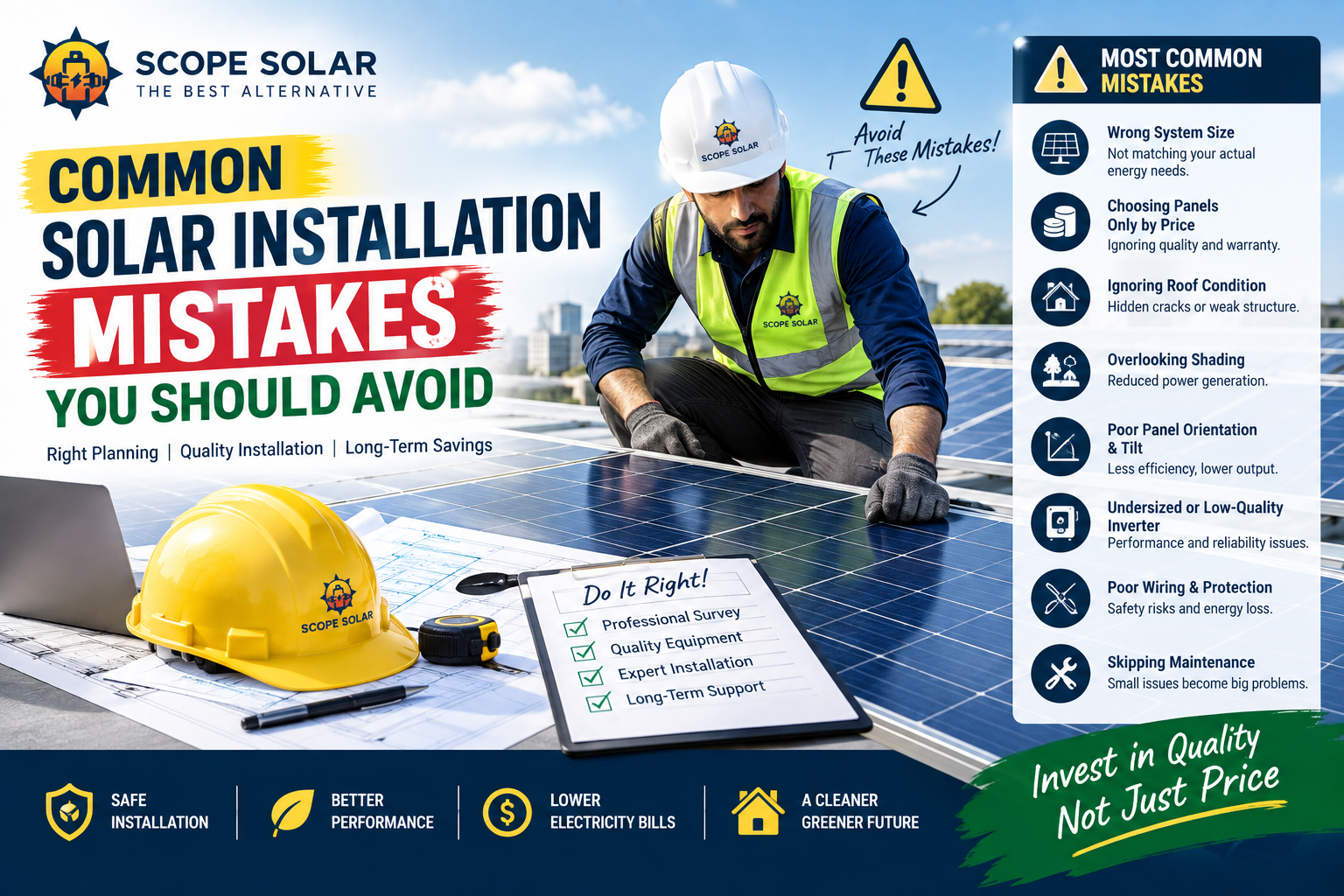
Installing a solar system is a major investment for homeowners, businesses and industries in Pakistan. With the growing demand for clean and affordable energy, more people are choosing solar solutions to reduce electricity expenses and improve energy independence. However, even the best solar panels and inverters can deliver poor results if the installation is not planned and completed correctly.
Many solar problems are not caused by the equipment itself. Instead, they happen because of incorrect system sizing, poor-quality installation, weak structures, improper wiring, or a lack of regular maintenance. Understanding the most common solar installation mistakes can help you protect your investment and achieve better long-term performance.
Whether you are planning to Buy Solar Panels for Home, a commercial project, or Industrial Solar Panel Installation, avoiding these mistakes is essential.
Buying Solar Panels Based Only on Price
Solar panels can represent a significant portion of the total Solar Installation Cost, but choosing the cheapest available panel is not always the best decision.
Low-quality or poorly documented panels may have lower initial prices but can create performance and reliability problems over time. Instead of focusing only on price, compare:
- Panel efficiency
- Cell technology
- Manufacturer reputation
- Product warranty
- Performance warranty
- Serial number and authenticity
- Temperature coefficient
- Degradation rate
- Local availability of after-sales support
Modern N-Type technologies, including TOPCon and other advanced cell designs, can provide strong efficiency and improved performance when selected from reliable manufacturers.
Choosing the Wrong System Size
One of the most common solar installation mistakes is selecting a system size without properly analyzing electricity consumption.
Some customers choose a system based only on their available budget, while others install more capacity than their property actually requires. Both approaches can create problems.
Before installation, a professional installer should evaluate:
- Monthly electricity consumption
- Peak electricity usage
- Major appliances and equipment
- Available roof or ground space
- Future electricity requirements
- Battery requirements
- Available sunlight throughout the day
A proper load assessment allows the installer to recommend a suitable system instead of simply selling a fixed number of panels.
For homeowners considering a Hybrid Solar System for Home, accurate load analysis is even more important because battery capacity and inverter selection must work together.
Installing Panels Without Checking Roof Condition
Another important mistake is installing solar panels on a roof without properly inspecting its condition.
Solar panels and mounting structures remain on the roof for many years. If the roof already has cracks, water leakage, weak sections, or structural problems, installation can make future maintenance more difficult.
A professional site survey should check:
- Roof strength
- Existing cracks
- Water drainage
- Shading
- Available installation area
- Roof orientation
- Mounting requirements
- Accessibility for maintenance
Fixing structural or waterproofing problems before installation is usually easier than dealing with them after the panels have been installed.
Ignoring Shading
Solar panels need direct sunlight to produce electricity efficiently. Even partial shading from trees, buildings, walls, water tanks, or nearby structures can reduce energy production.
A common mistake is checking the roof only at one time of day.
The installer should consider how shadows move throughout the day and across different seasons. This is particularly important for properties surrounded by tall buildings or trees.
Before finalizing the design, a professional solar company should perform a detailed site assessment and identify potential shading problems.
Poor Panel Orientation and Tilt
Solar panels should be positioned according to the property’s location and the project’s energy requirements.
Simply placing panels wherever there is available roof space can reduce their performance.
The installation team should consider:
- Direction
- Tilt angle
- Roof structure
- Seasonal sunlight
- Shading
- Wind exposure
- Row-to-row spacing
In Pakistan, proper orientation and tilt can make a meaningful difference in overall solar generation. Therefore, panel placement should be part of the engineering design rather than an afterthought.
Using an Undersized or Poor-Quality Inverter
The inverter is one of the most important components of a solar system because it converts the electricity generated by solar panels into usable power.
Choosing an inverter only because it is inexpensive can lead to reliability and performance issues.
When selecting an inverter, consider:
- System capacity
- Maximum PV input
- Efficiency
- MPPT range
- Number of MPPTs
- Protection features
- Battery compatibility
- Monitoring capabilities
- Manufacturer support
For customers looking for Buy Best Solar System Components, the inverter should be selected according to the complete system design rather than purchased separately.
Poor Electrical Wiring and Protection
Incorrect wiring is another serious solar installation mistake. Poor connections, unsuitable cable sizes, loose terminals and inadequate protection can reduce system performance and create safety risks.
A professional installation should use appropriate:
- DC cables
- AC cables
- Connectors
- Circuit breakers
- Surge protection
- Earthing arrangements
- Isolation equipment
- Distribution equipment
Cable management also matters. Wires should be properly secured and protected from excessive heat, moisture, mechanical damage and direct environmental exposure.
Never compromise on electrical safety just to reduce the initial installation cost.
Installing a Weak Mounting Structure
Solar panels are exposed to sun, rain, dust and strong winds for years. A weak mounting structure can damage panels or create alignment problems.
The mounting structure should be strong, corrosion-resistant and suitable for the property’s roof type.
Before installation, check:
- Material quality
- Structural strength
- Fasteners
- Corrosion resistance
- Roof attachment method
- Panel spacing
- Wind resistance
A reliable structure protects the panels and helps maintain the correct orientation over the long term.
Choosing Battery Capacity Without Understanding Your Loads
Battery storage can make a solar system more flexible, especially for customers who need backup power.
However, another common mistake is choosing a battery simply because it has a particular capacity.
Battery sizing should consider:
- Essential loads
- Backup duration
- Daily energy consumption
- Inverter capacity
- Battery chemistry
- Depth of discharge
- Charging requirements
- Expected future usage
For example, a household that wants backup for lights, fans, internet equipment and selected appliances will have different battery requirements from a business operating heavy equipment.
A correctly sized battery can improve both reliability and the overall value of a hybrid system.
Not Considering Future Electricity Requirements
Solar installation should not only address today’s electricity consumption. Electricity requirements can increase over time.
A homeowner may later add:
- Air conditioners
- Water pumps
- Electric appliances
- Additional refrigeration
- Electric vehicle charging
- Home office equipment
Similarly, a business may expand its operations and require additional energy.
When designing Commercial Solar Energy Solutions, installers should consider potential future loads so the system design remains practical as the business grows.
Hiring an Installer Based Only on a Low Quote
Price is important, but the cheapest solar quotation is not necessarily the best option.
A quotation should be evaluated based on the complete package, including:
- Solar panel brand and model
- Inverter brand
- Battery specifications
- Mounting structure
- Protection equipment
- Installation quality
- Warranty
- Monitoring system
- After-sales service
Customers searching for Solar Panels Installation Near Me should compare installers based on experience, project quality, equipment transparency and service—not just the final price.
A professional installer should also explain the system design clearly before installation begins.
Skipping Professional Site Assessment
A solar system should never be designed entirely from electricity bills or a phone conversation.
Every property is different. Roof direction, shading, available space, structural conditions, electrical infrastructure and load requirements can affect the final design.
A professional site survey helps identify these factors before installation.
This is particularly important for Industrial Solar Panel Installation, where large energy loads and complex electrical systems require detailed planning.
1Ignoring Monitoring and Maintenance
Installing solar panels does not mean the system should be forgotten.
Regular monitoring can help identify unusual drops in production, inverter warnings, communication problems, or other performance issues.
Basic maintenance can include:
- Cleaning panels when required
- Checking cables and connectors
- Inspecting mounting structures
- Reviewing inverter performance
- Checking battery health
- Monitoring energy production
- Inspecting electrical protection
Regular maintenance helps identify small problems before they become expensive repairs.
How to Avoid Solar Installation Mistakes
The easiest way to avoid these problems is to work with an experienced solar installation company that follows a proper process.
A reliable process should include:
- Step 1: Electricity load assessment
- Step 2: Professional site survey
- Step 3: Solar system design
- Step 4: Equipment selection
- Step 5: Detailed quotation
- Step 6: Professional installation
- Step 7: Testing and commissioning
- Step 8: Monitoring and after-sales support
This approach helps customers make informed decisions instead of selecting equipment based solely on price.
Why Professional Solar Installation Matters
The performance of a solar system depends on more than the number of panels installed. Equipment quality, engineering, installation practices, electrical protection and maintenance all influence the final result.
Whether you need Residential Off grid solar solutions, a Hybrid Solar System in Pakistan, or Best Commercial Solar Systems, professional planning can help maximize system performance and reliability.
At Scope Solar, customers can evaluate their requirements, property conditions and energy needs before selecting an appropriate solar solution.
Final Thoughts
Avoiding Common Solar Installation Mistakes can save you money, improve system performance and protect your solar investment for years. From choosing the correct system size to selecting quality components, checking roof conditions, preventing shading, using proper wiring and maintaining the system, every stage matters.
Instead of choosing a solar system based only on the lowest quotation, focus on quality, engineering, safety, warranties and long-term service. A professionally designed and installed solar system can provide reliable clean energy while helping homes and businesses manage their electricity costs more effectively.
FAQs
What is the most common solar installation mistake?
Incorrect system sizing is one of the most common mistakes. A solar system should be designed according to actual electricity consumption and future requirements.
Can shading reduce solar panel performance?
Yes. Trees, buildings, walls and other obstructions can reduce sunlight reaching the panels and lower energy production.
Why is inverter selection important?
The inverter must be compatible with the solar array, electrical loads and, where applicable, battery storage. An incorrectly sized inverter can affect system performance.
How can I reduce Solar Installation Cost without compromising quality?
Compare complete quotations, choose reliable equipment, optimize system sizing and avoid unnecessary components. Cutting costs by using poor-quality panels, wiring, or structures can create higher expenses later.
Is professional solar installation necessary?
Yes. Professional design and installation help ensure correct system sizing, safe electrical connections, proper panel positioning and reliable long-term performance.
What should I check before hiring a solar installer?
Check the company’s experience, equipment brands, warranties, installation standards, project history, monitoring options and after-sales support.