It is evident that solar energy has shifted from being a secondary consideration to a primary one due to new available technologies throughout the world, even Pakistan. Now solar energy is a feasible solution for many households and businesses in Pakistan. You may now power your home and even earn back up to 70,000 PKR every month with Net Metering Policy! This blog covers it all from the simple steps of installation to the costs involved as well as the various benefits associated with it. As a reminder, panels do more than just lower your expenses; they grant you control of your energy consumption. The adoption of solar energy is becoming crucial in Pakistan due to the skyrocketing costs of traditional energy sources.
What is Net Metering?
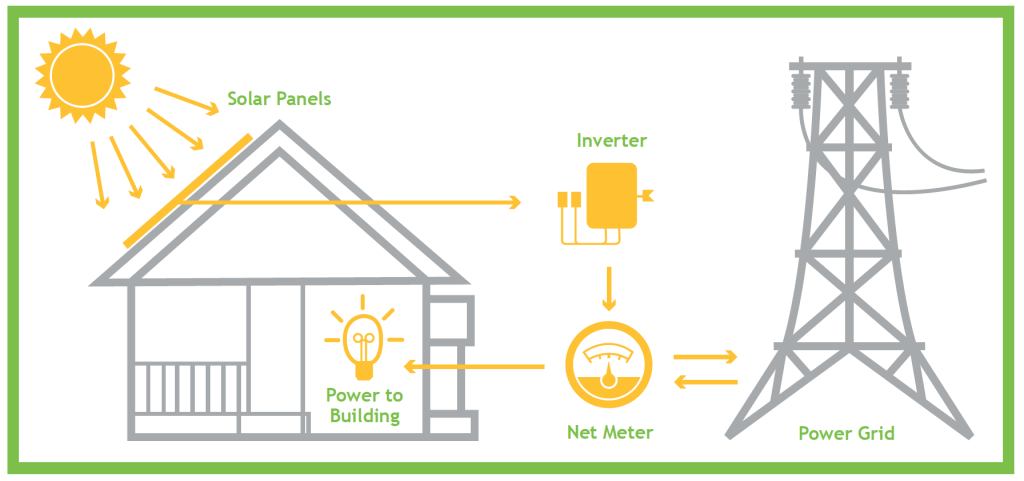
Net Metering is a form of technology that enables you to be a part of the WAPDA grid while simultaneously selling the surplus energy from your solar system. When the electric output from your solar panels is greater than the needs of your household, the additional electricity produced is sent back to the grid, and it is credited against your electricity bill. This results in lower monthly expenditures which improves the overall efficiency of energy consumption. This is one of the many ways solar energy investments can be maximized, while simultaneously reducing dependency on costly grid electricity. Net metering has the potential to reduce the payback period of your solar system considerably over time.
Eligibility Criteria for Net Metering in Pakistan
When applying for Net Metering in Pakistan, there are a few primary stipulations that need to be observed. Firstly, a solar system needs to be 3kW at the least. Systems lower than this do not qualify for Net Metering. Secondly, you need to be an enrolled consumer of any of the Distribution Companies, or DISCOs, like IESCO, LESCO, K-Electric, MEPCO or any other franchised subsidiary offer electricity in your locale. Another vital criterion is that your solar installation must have NEPRA approved components which guarantees its safe and operational readiness with the national grid. Finally, you should possess some basic documents including a CNIC, electricity meter serial number, and proprietary or title deeds pertaining to the property where the solar system is installed. Fulfilment of all these terms and conditions are the initial steps toward a user experiencing the complete advantages enjoyed through Net Metering.
Minimum and Maximum System Size Allowed
In regard to Net Metering in Pakistan, certain capacity restrictions must be observed. The system’s qualifying range starts at 3kW and ends at 1MW. Usually, residential customers forego 5kW to 10kW systems, which fully utilize household electricity, particularly during air conditioning, refrigeration, and washing machine usage, for more economical options. Meanwhile, commercial and industrial setups install systems far beyond 50kW to optimally exploit Net Metering benefits, in addition to meeting their higher energy demands.
Net Metering Technology
Under the practice of Net Metering, it is a prerequisite to have a bi-directional energy meter, which is capable of recording electricity flow in both directions. Both the electricity consumed from the grid and surplus energy sent back to the grid are measurable. It is this special meter which captures the complete energy sent by you to the grid and used by you from the grid. After all required permits are complete; your bi-directional meter will be set up by your respective DISCO (Distribution Company) which could be IESCO, LESCO, or K-Electric. This step in the procedure is important, so all the payments out of the solar systems can be accurately calculated and reimbursed as needed.
Installation of Solar System
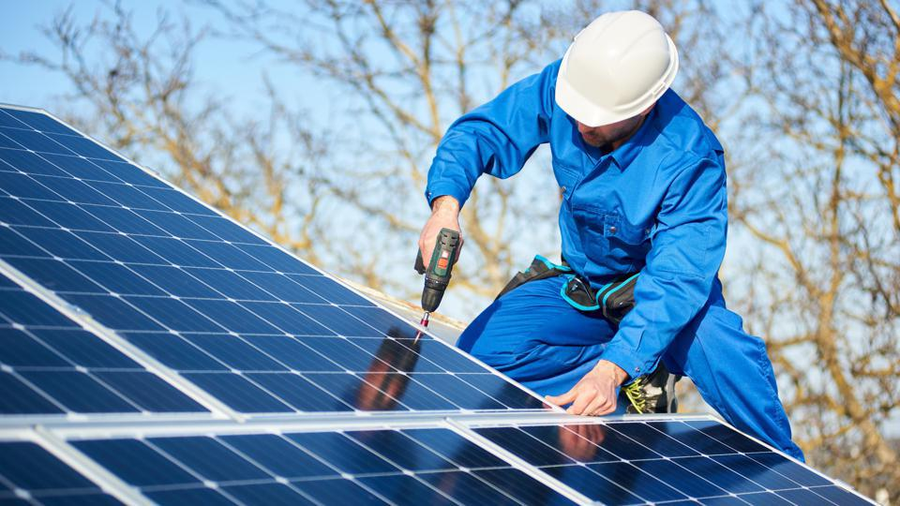
A certified solar provider has the obligation of installing every component of your solar energy system which includes solar panels, optimally Tier-1 rated solar panels which are the most sought-after due to their efficiency and durability. An inverter, either a hybrid or on-grid model, is installed depending on your energy requirements. The provider will also set up a mounting structure to hold the panels with proper wiring and protection systems to ensure safe and efficient operation. Upon completing the setup, the system should be functioning along with ready for an official inspection by the required bodies for the Net Metering approval.
Required Documents for Application
- CNIC Copy
- Recent Electricity Bill
- Property Ownership Documents or Rent Agreement
- Solar Installer’s Company License
- System Diagram & Technical Details
Preparation of Application
Following the installation of your solar system, your solar installer will take care of preparing and submitting the Net Metering application for you. This application is directed to the local DISCO which may include LESCO, MEPCO, K-Electric, or the relevant electricity distribution company in your region. The submission includes your CNIC, property documents, system capacity information, and other technical details of the solar system. A competent installer takes care of all documentation so that there is no delay in receiving the approval.
Inspection & NOC Issuance
When your Net Metering application is submitted, your solar system will be inspected technically by DISCO officials. During the inspection, they ensure that every single component, which includes the solar panels, inverter, wiring, mounting structures, is checked and complete. If everything checks out, the officials issue a No Objection Certificate (NOC) which is a clear nod of approval allowing you to proceed with the subsequent stages of the Net Metering process.
Signing of Agreement
After obtaining the No Objection Certificate (NOC) the subsequent action is to execute an Interconnection Agreeement with your respective DISCO. This agreement is essentially a legal document that authorizes you to commercially export the excess electricity that is produced by your solar system into the electricity grid. Upon execution of this agreement, you will effectively start participating in the Net Metering system which allows users to be reimbursed on their electricity invoices in relation to the electricity they contribute. This stage is necessary to enable you connect your solar system legally to the national grid to enable receiving returns on the investment made.
Allotment of Generation License
After signing the Interconnection Agreement, your application is forwarded to NEPRA (National Electric Power Regulatory Authority) for further approval. NEPRA reviews the details of your solar system and, once everything is in order, issues a Generation License. This license officially authorizes you to generate electricity and participate in the Net Metering program. Typically, the Generation License is valid for seven years, allowing you to benefit from solar energy production and export during this period. Renewals or extensions can be managed according to NEPRA’s guidelines.
Activation of Net Meter
Your solar system will be officially enabled for net metering after the generational license approval and the bilateral meter installation. At that juncture, you may begin surplus electricity exports to the national grid, enabled by your energy production. This improves your utility savings and potentially transforms your solar investment into revenue. Moreover, your system is fully synchronized with the grid, thus your energy consumption and production is enabled in an uninterrupted manner.
Advantages of Reverse Metering in Pakistan
Own Electricity and Control Billing
Solar power augmented by Net Metering places you in control of your electricity consumption and billing cycle. Through this arrangement, you consume the electricity produced by your solar power system, enabling you to decentralize your dependence on the grid and manage your finances more adeptly on a monthly basis.
Easy on the Wallet
One of the most notable benefits is the decrease in your monthly electricity expenses. In certain instances, particularly with larger systems, your bill may even be eliminated entirely. As a result, solar energy becomes an economically advantageous solution.
Best Utilization of 20% to 40% Output
And when there is little electricity consumption at the residence, like in the afternoon when all the family members are away, the solar panels you have installed continue to generate electricity. Your solar panels do not suffice as a burden because with Net Metering, you can transmit the excess electricity you produce back into the grid and receive credit.
Sell & Earn
Capitalizing on excess electricity ensures steady passive income every month. This “sell and earn” model not only helps in recovering your investment but can also become an asset over time.
Burden off the Grid
Creating and distributing your own electricity through the national grid contributes to reducing the demand on the system. This reduction in demand could reduce the power outages as well as provide stable electricity supply to the whole community which would benefit, not only your family but all users connected to the grid.
Cost of Net Metering System in Pakistan 2025 Update
| System Size | Estimated Cost (PKR) |
| 5kW | 8 to 9 Lac |
| 10kW | 15 to 17 Lac |
| 15kW | 22 to 25 Lac |
With respect to a net metering system, there is an additional cost of a meter and NEPRA licensing which is around PKR 60,000 to 80,000 extra. Get a Free Quote Now.
Time Frame – How Long Does It Take?
Net metering activation usually takes between 30 to 60 days, depending on factors such as:
- The processing speed of the DISCO
- The turnaround time for the NEPRA license
- The completeness of your submitted documentation
Common Challenges in Net Metering Process
- Application delays by DISCO
- Documentation issues
- Technical non-compliance
- Meter shortage in some areas
- Lack of awareness among local DISCO staff
Annual Benefits & Payback Period
On average, a 10kW system with net metering:
- Saves Rs. 25,000 to 40,000/month
- Recovers investment in 3 to 4 years
- Increases property value significantly
Why Choose Scope Solar?
Priding itself on being the best solar installation company in Lahore, Pakistan, Scope Solar offers high-quality solar solutions inclusive of Tier-1 solar panels and professional installation as Scope Solar has Pakistan’s licensed installation teams. We facilitate every aspect of net metering by managing all NEPRA and DISCO paperwork so that you don’t have to worry about any aggravating detail. We offer 24/7 support and monitoring services to ensure your system runs efficiently, saving you energy costs while reaping long-term benefits. For expert service and sustainable energy solutions, put your trust in Scope Solar.
Conclusion
Net metering is more than just an enhancement; it is an intelligent investment toward both your financial self-sufficiency and the energy future of Pakistan. If you are deliberating installing solar panels, the answer is fairly straightforward: install them now. Given the escalating costs of energy and the intermittent load shedding, solar power coupled with net metering is the way to go.
Interested in Getting Net Metering?
Reach out Scope Solar today for an accompanying solar survey and quote at no charge.