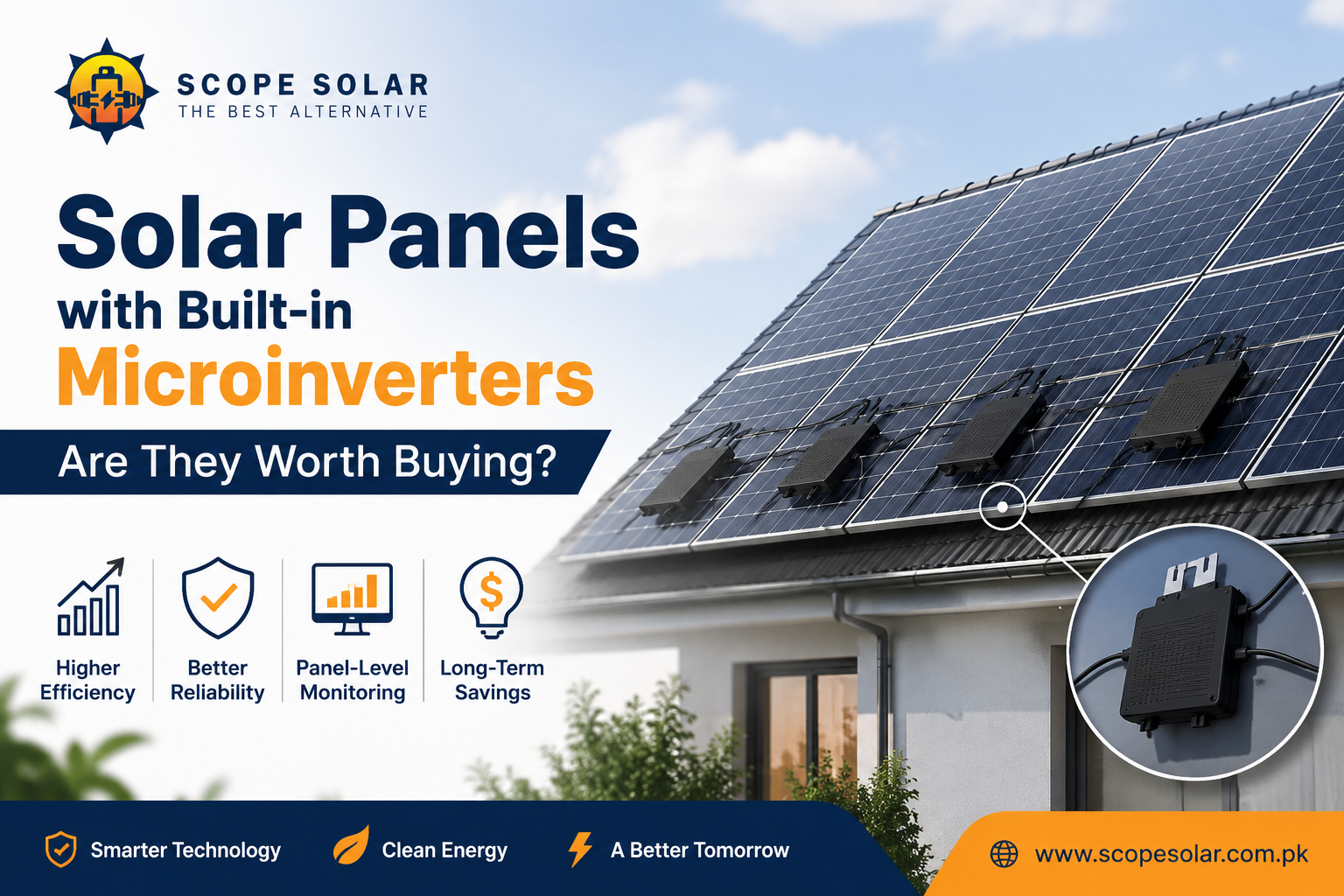
Solar technology is evolving rapidly and one of the most exciting innovations in 2026 is the rise of Solar Panels with Built-in Microinverters. Unlike traditional solar systems that use a single string inverter for multiple panels, these advanced panels come with an individual microinverter attached to the back of each solar panel. This modern design improves energy production, enhances system reliability and simplifies installation.
As homeowners and businesses look for smarter and more efficient renewable energy solutions, microinverter technology is becoming increasingly popular worldwide. While it has already gained significant traction in North America, Europe and Australia, interest is also growing in Pakistan as more people seek high-performance solar systems that deliver better long-term value.
Whether you’re planning a Residential Solar System, upgrading a Commercial Solar System, or exploring innovative Solar Energy Solutions, understanding how built-in microinverters work can help you make a more informed investment.
In this guide, we’ll explain everything you need to know about built-in microinverters, including their advantages, limitations, performance, costs and whether they are the right choice for your property.
What Are Solar Panels with Built-in Microinverters?
Traditional solar systems connect multiple panels to a single string inverter that converts Direct Current (DC) electricity into Alternating Current (AC) for household or commercial use.
A solar panel with a built-in microinverter works differently.
Instead of sending DC electricity to one central inverter, each solar panel has its own microinverter installed directly behind the panel.
This means every solar panel independently converts DC electricity into usable AC electricity before sending it to your home or business.
As a result, every panel operates independently, making the entire system smarter and more efficient.
How Do Built-in Microinverters Work?
Each solar panel continuously generates DC electricity whenever sunlight reaches its surface.
The built-in microinverter immediately converts this DC electricity into AC electricity that can be used by electrical appliances.
Unlike string inverter systems, where one underperforming panel can affect the output of the entire array, microinverter systems allow every panel to perform independently.
This intelligent design ensures maximum energy production throughout the day.
The system generally includes:
- Solar panel
- Integrated microinverter
- AC trunk cable
- Monitoring gateway
- Smart monitoring application
The combination of these components creates a highly efficient and intelligent solar power system.
Why Are Built-in Microinverters Becoming Popular?
The global solar industry is moving toward smarter and more flexible energy systems.
Modern homeowners and businesses want:
- Higher efficiency
- Better reliability
- Individual panel monitoring
- Easy expansion
- Improved safety
- Lower maintenance
Built-in microinverters successfully address all of these needs.
This is why many premium solar manufacturers are now introducing factory-integrated AC solar panels.
Industry experts predict that AC solar panels with integrated microinverters will continue gaining market share over the next decade due to their superior performance and simplified installation process.
Key Benefits of Solar Panels with Built-in Microinverters
Better Energy Production
One of the biggest advantages is increased energy generation.
In conventional systems, if one panel is shaded by trees, dust, nearby buildings, or other obstacles, the performance of the entire string may decrease.
With built-in microinverters, every panel operates independently.
Even if one panel produces less electricity, the remaining panels continue generating power at their maximum capacity.
This leads to higher overall system efficiency.
Excellent Performance in Partial Shading
Shading is one of the biggest challenges for rooftop solar installations.
Objects like:
- Water tanks
- Trees
- Chimneys
- Nearby buildings
- Satellite dishes
can cast shadows over individual panels.
Microinverter technology minimizes these losses because only the shaded panel experiences reduced performance.
The rest of the system remains unaffected.
This makes built-in microinverters an excellent solution for homes with complex roof layouts.
Individual Panel Monitoring
Another major benefit is real-time monitoring.
Each panel can be monitored separately using a mobile application or online dashboard.
Users can easily check:
- Daily electricity generation
- Monthly performance
- Lifetime production
- Individual panel health
- Fault notifications
- Maintenance alerts
This level of visibility helps identify problems quickly and ensures the system continues operating efficiently.
For customers investing in a Residential Solar System or Commercial Solar System, detailed monitoring provides greater confidence in their solar investment.
Improved System Reliability
Traditional systems depend heavily on a single inverter.
If the string inverter fails, the entire solar system stops producing electricity until repairs are completed.
With built-in microinverters, each panel functions independently.
Even if one microinverter develops a fault, the remaining panels continue generating electricity.
This greatly improves system reliability and reduces unexpected downtime.
Enhanced Safety
Safety has become an important consideration in modern solar installations.
Since built-in microinverters convert electricity directly at each panel, they significantly reduce the amount of high-voltage DC wiring across the roof.
Lower DC voltage reduces electrical risks and improves the overall safety of the installation.
Many modern microinverter systems also include rapid shutdown capabilities that enhance protection during maintenance or emergency situations.
Easier System Expansion
Many homeowners decide to expand their solar systems after a few years.
This process can be complicated with traditional string inverter systems because inverter capacity must match the total number of panels.
Microinverter systems make expansion much easier.
New panels with integrated microinverters can simply be added without replacing the existing inverter.
This flexibility makes them ideal for homeowners planning future upgrades.
Smart Features in Modern Microinverter Systems
The latest generation of microinverters includes intelligent software powered by Artificial Intelligence and cloud-based monitoring platforms.
Modern features include:
- Smart fault detection
- Performance optimization
- Automatic software updates
- Weather-based performance analysis
- Mobile app monitoring
- Remote diagnostics
- Energy production forecasting
These smart capabilities improve user experience while helping maximize long-term system performance.
Built-in Microinverters vs Traditional String Inverters
| Feature | Built-in Microinverters | Traditional String Inverters |
| Panel Performance | Independent | Connected in series |
| Shading Impact | Very Low | Can affect the whole string |
| Monitoring | Individual panel monitoring | Overall system monitoring |
| Expansion | Easy | More complex |
| Reliability | High | Depends on one inverter |
| Installation Flexibility | Excellent | Moderate |
| Safety | Higher | Standard |
| Long-Term Performance | Better | Good |
For properties with multiple roof angles, occasional shading, or plans for future expansion, built-in microinverters often provide greater flexibility and better energy production over time.
Are They Suitable for Homes in Pakistan?
Pakistan’s growing interest in modern Solar Energy Solutions makes built-in microinverters an attractive option, particularly for homeowners with roofs that experience partial shading or have complex layouts.
They are also a good choice for small businesses that want detailed system monitoring and easier future expansion.
When installed by an experienced Solar Company in Pakistan, these systems can deliver reliable performance, improved energy generation and simplified maintenance.
Professional installers such as Scope Solar evaluate roof design, energy requirements and future expansion plans before recommending the most suitable solar technology for each customer.
Are There Any Disadvantages of Built-in Microinverters?
While built-in microinverters offer many advantages, they may not be the perfect solution for every solar project. Understanding their limitations helps homeowners and businesses make a well-informed decision.
Higher Initial Cost
One of the biggest considerations is the upfront investment.
Since every solar panel includes its own microinverter, the overall installation cost is generally higher than a conventional string inverter system.
However, many property owners view this as a long-term investment because improved energy production and lower maintenance requirements can provide greater value over the life of the system.
More Electronic Components
A traditional solar system usually relies on a single inverter, whereas a microinverter-based system includes one inverter for every panel.
This means there are more electronic components installed across the rooftop.
Fortunately, modern microinverters are designed to withstand harsh environmental conditions, including:
- High temperatures
- Heavy rainfall
- Dust
- Humidity
- UV exposure
Leading manufacturers conduct extensive reliability testing to ensure long-term performance.
Professional Installation Is Essential
Although installation is straightforward for trained professionals, proper system design and commissioning remain important.
Choosing an experienced Solar Company in Pakistan ensures that:
- The system is correctly sized.
- All components are properly connected.
- Monitoring software is configured accurately.
- Safety standards are followed.
- Maximum energy production is achieved.
Working with experienced installers like Scope Solar helps customers get the best performance from modern solar technologies.
Lifespan of Built-in Microinverters
Modern microinverters are engineered for durability.
Many premium manufacturers design them to operate for 20 to 25 years, which closely matches the expected lifespan of high-quality solar panels.
Unlike older inverter technologies that may require replacement earlier, newer microinverters are built using advanced electronics, better cooling systems and improved weather-resistant materials.
Routine inspections and occasional software updates can further support reliable long-term operation.
Maintenance Requirements
One of the major advantages of built-in microinverters is their low maintenance.
Most systems include intelligent monitoring software that automatically detects abnormal performance.
Routine maintenance typically includes:
- Cleaning solar panels regularly.
- Inspecting electrical connections.
- Checking mounting structures.
- Reviewing monitoring reports.
- Scheduling periodic professional inspections.
Because each panel operates independently, troubleshooting is often faster and more accurate than with traditional systems.
Who Should Consider Solar Panels with Built-in Microinverters?
These systems are particularly suitable for users who want high performance, flexibility and advanced monitoring.
They are an excellent choice for:
Homeowners
People installing a Residential Solar System on roofs with multiple directions or partial shading can benefit from independent panel operation and detailed monitoring.
Commercial Buildings
Businesses investing in a Commercial Solar System often value higher energy production, improved reliability and the ability to monitor every panel individually.
Industrial Facilities
Large industrial users looking for efficient Industrial Solar Solutions can use microinverter technology in selected applications where system flexibility and operational visibility are priorities.
Smart Homes
Homes equipped with smart energy management systems can integrate microinverter technology with energy monitoring platforms for better control over electricity usage.
2026 Trends in Microinverter Technology
The solar industry continues to evolve rapidly and microinverter technology is advancing alongside it.
Some of the latest trends include:
AI-Based Performance Optimization
Artificial Intelligence is helping monitor panel performance, identify efficiency losses and provide maintenance recommendations before issues become serious.
Cloud-Based Monitoring Platforms
Users can now access real-time system data from anywhere using secure mobile applications and web dashboards.
Enhanced Cybersecurity
Manufacturers are introducing stronger security features to protect connected solar monitoring systems from unauthorized access.
Improved Efficiency
New-generation microinverters are achieving higher conversion efficiencies, allowing more of the electricity generated by solar panels to be used effectively.
Better Compatibility
Modern microinverters are increasingly compatible with a wide range of premium solar panels, making future upgrades more flexible.
These developments are making integrated microinverter systems more attractive for homeowners and businesses seeking reliable, future-ready Solar Energy Solutions.
Are Built-in Microinverters Worth Buying?
The answer depends on your property, budget and long-term energy goals.
If your roof experiences partial shading, has multiple orientations, or you plan to expand your solar system in the future, built-in microinverters can be an excellent investment.
They offer:
- Better performance under challenging conditions.
- Individual panel monitoring.
- Greater system reliability.
- Enhanced safety.
- Easier future expansion.
- Advanced smart features.
Although the initial investment may be slightly higher than traditional systems, many users appreciate the additional performance, convenience and operational visibility they receive over time.
For many modern homes and businesses, these advantages make built-in microinverters a practical and forward-looking choice.
How Scope Solar Helps You Choose the Right Solar Technology
Selecting the right solar system involves more than choosing high-quality panels. Factors such as roof design, energy consumption, future expansion plans and monitoring requirements all play an important role.
At Scope Solar, every project begins with a detailed assessment to recommend the most suitable solution for each customer. Whether you’re considering a Residential Solar System, a Commercial Solar System, or large-scale Industrial Solar Solutions, the focus is on delivering reliable performance through quality components, professional installation and ongoing technical support.
As a trusted Solar Company in Pakistan, Scope Solar stays up to date with the latest solar innovations, helping customers adopt technologies that offer long-term efficiency and dependable energy production.
Final Talk
Solar Panels with Built-in Microinverters represent one of the most exciting innovations in modern solar technology. By allowing every solar panel to operate independently, they improve energy production, simplify system monitoring, enhance safety and increase overall reliability.
As solar technology continues to advance in 2026, integrated microinverters are becoming an attractive option for homeowners and businesses looking for smarter and more efficient renewable energy systems.
While they may require a slightly higher upfront investment, the long-term benefits including improved performance, easier expansion and advanced monitoring make them a valuable choice for many installations.
If you’re planning to invest in advanced Solar Energy Solutions, consulting experienced professionals like Scope Solar can help you determine whether microinverter technology is the best fit for your property and future energy needs.
Frequently Asked Questions (FAQs)
What is a built-in microinverter?
A built-in microinverter is a compact inverter attached directly to an individual solar panel. It converts DC electricity into AC electricity at the panel level, allowing each panel to operate independently.
Are microinverters better than string inverters?
Microinverters generally perform better in situations involving partial shading, complex roof designs, or future system expansion. String inverters remain a good option for simple, unshaded installations.
Do built-in microinverters require more maintenance?
No. Most modern systems are designed for low maintenance and include intelligent monitoring tools that quickly identify any performance issues.
How long do built-in microinverters last?
Most high-quality microinverters are designed to operate for approximately 20–25 years when installed and maintained correctly.
Can built-in microinverters improve energy production?
Yes. Since each panel works independently, energy losses caused by shading or underperforming panels are minimized, improving overall system output.
Are built-in microinverters suitable for homes in Pakistan?
Yes. They can be an excellent option for homes and businesses with partially shaded roofs, multiple roof angles, or plans to expand their solar systems in the future.